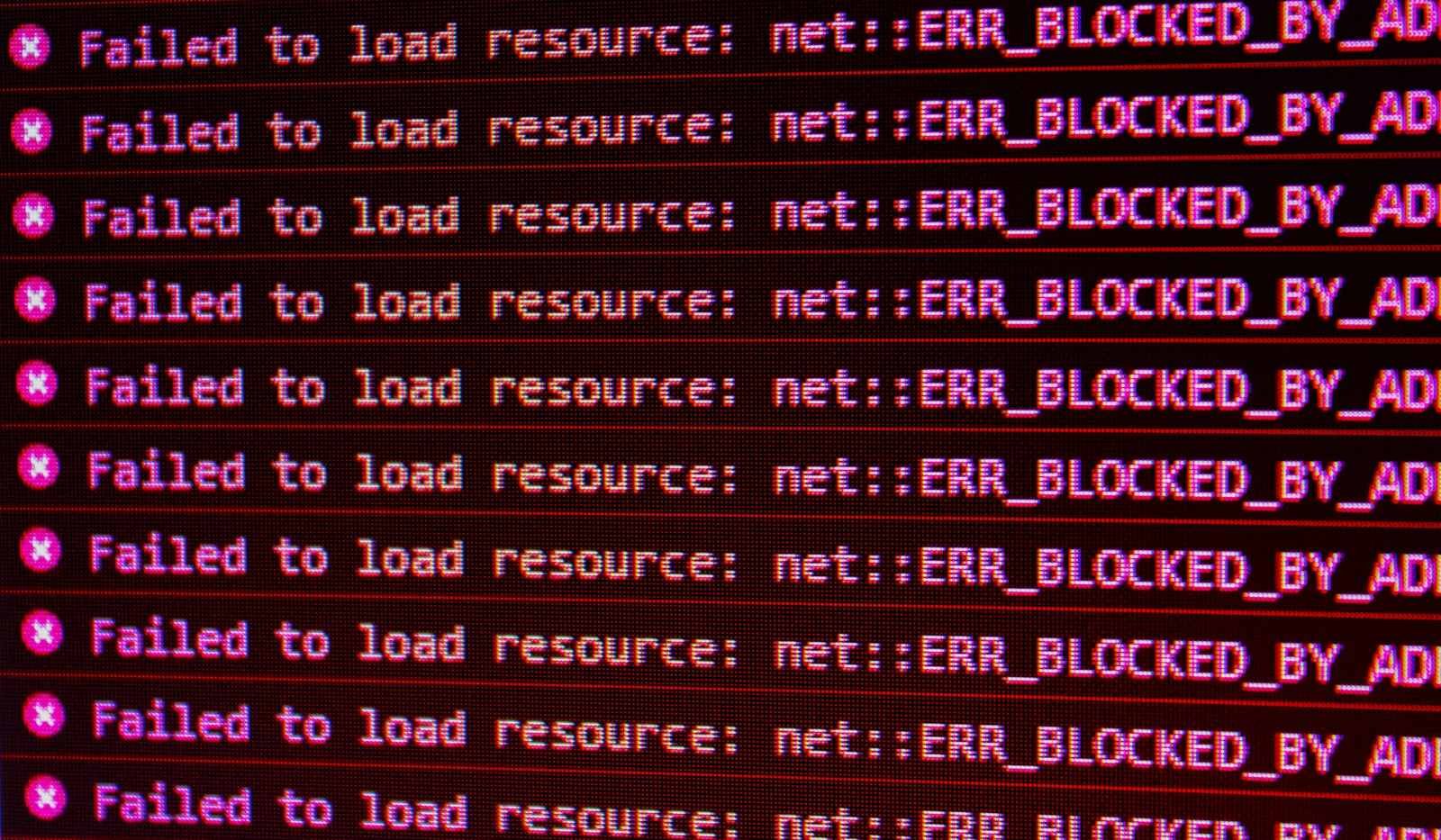
A Risk That Sits Between Fraud and Ordinary Downtime
Most students evaluating a pay someone to take my online class provider ask the right first question: is this a scam. That question, useful as it is, tends to skip past a quieter risk that our audits keep encountering in a different form. A provider does not need to be a scam in the classic sense, take the money and vanish immediately, to leave a student stranded mid course. It only needs to become unreachable at the wrong moment, for reasons that have nothing to do with the quality of the work it was doing.
That is the subject of this investigation. Somewhere between outright fraud and ordinary server downtime sits a third category worth naming on its own: a provider whose website, support inbox, or client portal simply stops answering from a specific country, sometimes for a technical reason, sometimes because the operator is deliberately fencing off traffic from a jurisdiction that has started paying attention to it. From the student's chair, both look identical. The page will not load, the chat widget goes silent, and the class is still due on Friday.
What Actually Causes a Provider to Disappear From a Region
A handful of distinct mechanisms produce the same visible symptom, and it is worth separating them because each implies a different level of risk to a paying student. The first and most literal is a geographic access block, sometimes called geofencing, where a provider configures its hosting or content delivery network to reject connections originating from certain countries. Operators use this for ordinary reasons too, avoiding traffic they cannot legally serve, but in this industry it shows up more often as a way to stay a step ahead of a regulator, a university system, or a payment network that has begun cracking down on academic contract cheating services headquartered or advertising in that country.
The second mechanism is a payment processor ban. When a card network, bank, or processor decides a merchant category is too high risk or has drawn too many chargebacks, it can cut off the merchant account entirely. A provider facing this often reacts by migrating to a new domain and a new payment gateway rather than resolving the underlying complaints, and the old domain either goes dark or starts redirecting somewhere unrelated. The third mechanism is the least dramatic and the most common in the reviews we have audited: the provider simply stops responding, support tickets go unanswered, live chat sits idle, and no explanation is ever given, whether or not the underlying site is technically still online.
It is important to be precise about the difference between these, because they are often reported interchangeably. A true geographic block is a deliberate technical decision by the operator. A support team that goes quiet is a staffing or business decision that produces a similar experience for the student without necessarily involving any blocking at the network level at all. This piece treats both as part of the same underlying risk category, a paid for service becoming inaccessible when a student needs it, while being honest that the two are not always technically the same event.
What Our Own Audits Have Actually Documented
We want to be precise about the evidence behind this piece rather than assert the pattern in the abstract. Our own reviewing team has, on at least one occasion, run directly into a version of this problem while trying to audit a provider rather than while acting as a paying customer. During a review cycle for myassignmenthelp.com, an access restriction limited how much of the live site our forensic and financial risk analysts could freshly cross check, which is why that listing notes explicitly that its assessment leans on category level patterns rather than a fully current, page by page verification. Whatever the specific cause of that restriction, the practical effect for anyone trying to reach the live site during that window was the same one a student would experience: pages that would not reliably load or verify.
Separately, our review of paysomeonetotakemyonlineclass.us documents a recurring theme across Trustpilot complaints, students reporting that support representatives stop responding once full payment has already been collected, leaving them with limited options while coursework is still outstanding. Our audit of noneedtostudy.com lists unresponsive customer support following grade dispute claims as one of the recurring patterns pulled from Trustpilot trend analysis on that listing. None of these three examples is a documented, confirmed case of deliberate country level geofencing specifically. What they share is the same functional outcome this article is built around, a paid provider becoming unreachable at the exact moment a student most needs a response, whether the underlying cause turns out to be a network block, a processor dispute, or a support team that has simply stopped answering.
A note on how we are framing this evidence. We do not have a confirmed case in our own audits of a provider blocking a student by country specifically, and we are not claiming otherwise. The three examples above are real entries drawn from our published reviews, cited and linked to the original listing rather than reproduced verbatim, and they document the closest and most directly comparable risk we have on record, a provider that stopped being reachable after payment. We are treating sudden unresponsiveness and outright geographic blocking as related points on the same spectrum of access risk, and we say so plainly rather than blurring the two together.
Why Offshore and Loosely Regulated Providers Carry More of This Risk
Not every provider in this industry carries the same exposure to sudden inaccessibility, and the difference tracks fairly closely with how the business is actually structured. A provider that operates under one stable, long held domain, discloses a real registered business entity, and has kept the same support channels for years has very little practical reason to vanish or restrict access to any single country. Its exposure to enforcement action is lower to begin with, since it is not typically the target being pursued, and even if it were, shutting off an entire national market is a costly decision a stable, revenue focused business tends to avoid unless forced into it.
A provider operating offshore, behind a domain registered anonymously, with no verifiable company name attached to it, faces a completely different set of incentives. It has comparatively little invested in any single domain or brand identity, so abandoning one in favor of a fresh one costs it almost nothing. If a payment processor flags the merchant account, or a country's consumer protection body starts issuing takedown requests, the cheapest response available to that kind of operator is often to fence off the offending region or quietly relaunch under a new name rather than to fix whatever triggered the scrutiny in the first place. The student who already paid is, from that operator's perspective, a sunk transaction rather than an ongoing relationship worth preserving.
This is the structural reason geographic access risk clusters so heavily around providers with thin or absent public identities. It is not that offshore operators are uniquely dishonest by nature. It is that their entire cost structure rewards disposability over durability, and a student paying full price upfront is betting against that incentive without realizing the bet exists.
The Early Signals Worth Watching For
Most of the providers that eventually become unreachable show at least one recognizable sign before the money is ever handed over, if a student knows to look for it. A domain that has clearly changed at least once already, discoverable through a quick registration history lookup or simply by finding an old cached version of the same business under a different web address, is one of the strongest indicators available. A provider that has already relocated once has demonstrated it is willing to do it again, and the second move tends to happen with even less warning than the first.
A second signal is the complete absence of a verifiable street address or registered business entity anywhere on the site, in its terms of service, or in a basic public records search. Legitimate businesses that intend to keep operating under their current name generally do not mind this information being findable, since it is a low cost way to build trust. Its absence is not automatic proof of bad intent, but it does remove one of the few concrete facts a student could use to hold the provider accountable if something went wrong.
A third and increasingly common signal is a support channel that only exists through a messaging app such as WhatsApp or Telegram, with no working phone number and no monitored email address behind it. A messaging app account can be abandoned, blocked, or simply muted in seconds, and it leaves no independent record outside the app itself the way a support ticket in an email thread does. A provider whose only communication channel can vanish that easily is, structurally, a provider whose entire relationship with a paying student can vanish just as easily.
What Limited Recourse Actually Exists
If a provider does go dark after payment, the realistic options are narrower than most students expect, and time matters more than almost anything else. A payment dispute through the card issuer or bank used for the transaction is the most reliable lever available, but nearly every dispute window is time limited, often somewhere between sixty and one hundred twenty days from the transaction date depending on the card network and country, and it does not pause simply because the provider has stopped answering. Filing that dispute as soon as unresponsiveness becomes clear, rather than waiting to see if contact resumes, meaningfully improves the odds of a favorable outcome.
Saved evidence carries more weight in that process than most students assume going in. Screenshots of the order confirmation, the payment receipt, any written promises about the class or the grade, and the last working version of the provider's contact page are all the kind of documentation a bank typically asks for when evaluating a dispute. Capturing this evidence before it is needed, not after the site has already gone dark, is the only way to guarantee it still exists when a bank finally requests it.
Beyond the bank, a report to a national consumer protection body, such as the Federal Trade Commission in the United States or the equivalent regulator in the student's own country, rarely produces a fast individual refund, but it does add the complaint to a public record that can eventually support broader enforcement action against a pattern of behavior rather than a single transaction. None of these options guarantees the money comes back. Together, they represent the actual limit of what is available once a provider has already gone quiet, which is exactly why the earlier signals matter more than any recovery step taken afterward.
A Short Checklist Before You Pay
None of the individual checks below is a guarantee on its own. Together, they meaningfully reduce the odds of paying a provider that turns out to be structurally disposable.
- Search the domain name together with words such as scam, refund, and complaint, and separately check whether the same business has operated under a different web address before.
- Confirm a real, verifiable business name and location exist somewhere in the provider's terms of service or public records, not only a generic contact form.
- Confirm at least one durable support channel exists, an email address or phone number the provider actually monitors, rather than a messaging app account as the only option.
- Pay in staged installments tied to specific deliverables rather than the full balance upfront, whenever the provider allows it.
- Use a payment method that preserves your dispute rights, such as a major credit card, rather than a method with no chargeback process.
- Save a copy of the order confirmation, the price quote, and the provider's stated refund policy somewhere outside the provider's own platform the moment you pay.
The Bottom Line
A provider going dark is not always a scam in the narrow, deliberate sense of the word, and it is not always a geographic block in the strict technical sense either. Both possibilities, along with plain unresponsiveness, land the student in the same position: money already spent, a class still due, and a page that will not load. The examples documented across our own reviews, an audit team temporarily unable to freshly verify a live site, and separate reports of support going silent right after payment clears, all point toward the same underlying lesson. Reachability is not a guarantee that comes with any provider, and it is worth checking for directly, before payment, rather than assuming it as a given.
This directory will continue tracking documented cases of this pattern as they surface across the providers we audit. If you have experienced a provider becoming unreachable from your country or region after paying, our contact desk is the right place to report it.
Frequently Asked Questions
It means the provider's server or content delivery network is set to refuse or redirect visitors connecting from a particular country or region, so the same web address that worked before loads an error, a blank page, or nothing at all from that location. Providers do this most often to avoid a specific regulator, payment processor, or law enforcement body active in that country.
Not always. A geographic block is one specific cause among several that produce the same visible result, a site the student can no longer reach. The same outcome can also come from a provider quietly abandoning a domain, a payment processor suspending the account behind it, or support simply going unresponsive without the underlying site ever changing. Treat the broader pattern, not just the technical cause, as the risk worth planning around.
Start a payment dispute with your bank or card issuer immediately, since most dispute windows are time limited and do not wait for the provider to respond. Gather every receipt, message, and screenshot you already have before you lose access to the account where they were stored, and report the provider to your card network and to a consumer protection body in your country even if a refund is not guaranteed.
Not necessarily. A provider that blocks one country or region may still be fully operational and taking new orders from students in other locations, since the block is often aimed at avoiding a specific regulator or payment processor rather than shutting down the whole operation. That distinction matters for a student trying to decide whether contacting the company through a different channel is even worth attempting.
Trying to work around a block does not resolve the underlying accountability problem, since the same provider that fenced off a country for its own reasons can still choose not to respond once reached. A student in that situation is generally better served by documenting the block and starting a payment dispute than by spending time trying to restore access to a company that has already shown a willingness to cut off contact.